The past few years have exposed how vulnerable global supply chains can be to unexpected disruptions. From pandemics and geopolitical conflicts to port congestion, labor shortages, and extreme weather events, third-party logistics (3PL) providers have been forced to rethink how they prepare for crises. In 2025, crisis planning is no longer optional—it is a strategic necessity.
For 3PL companies, the ability to anticipate, respond to, and recover from disruptions determines not only operational continuity but also customer trust and long-term competitiveness.
Why Crisis Planning Matters More Than Ever in 3PL
3PL providers operate at the intersection of multiple supply chain partners, making them particularly exposed to risk. A single breakdown—whether in transportation, warehousing, or information systems—can ripple across the entire network.
Recent disruptions have shown that:
- Over 70% of supply chain leaders experienced significant operational setbacks due to unplanned events.
- Companies without formal crisis response plans took 30–50% longer to recover compared to those with structured contingency strategies.
- Customers are increasingly prioritizing logistics partners with proven risk management and resilience capabilities.
These realities have elevated crisis planning from a back-office function to a board-level concern.
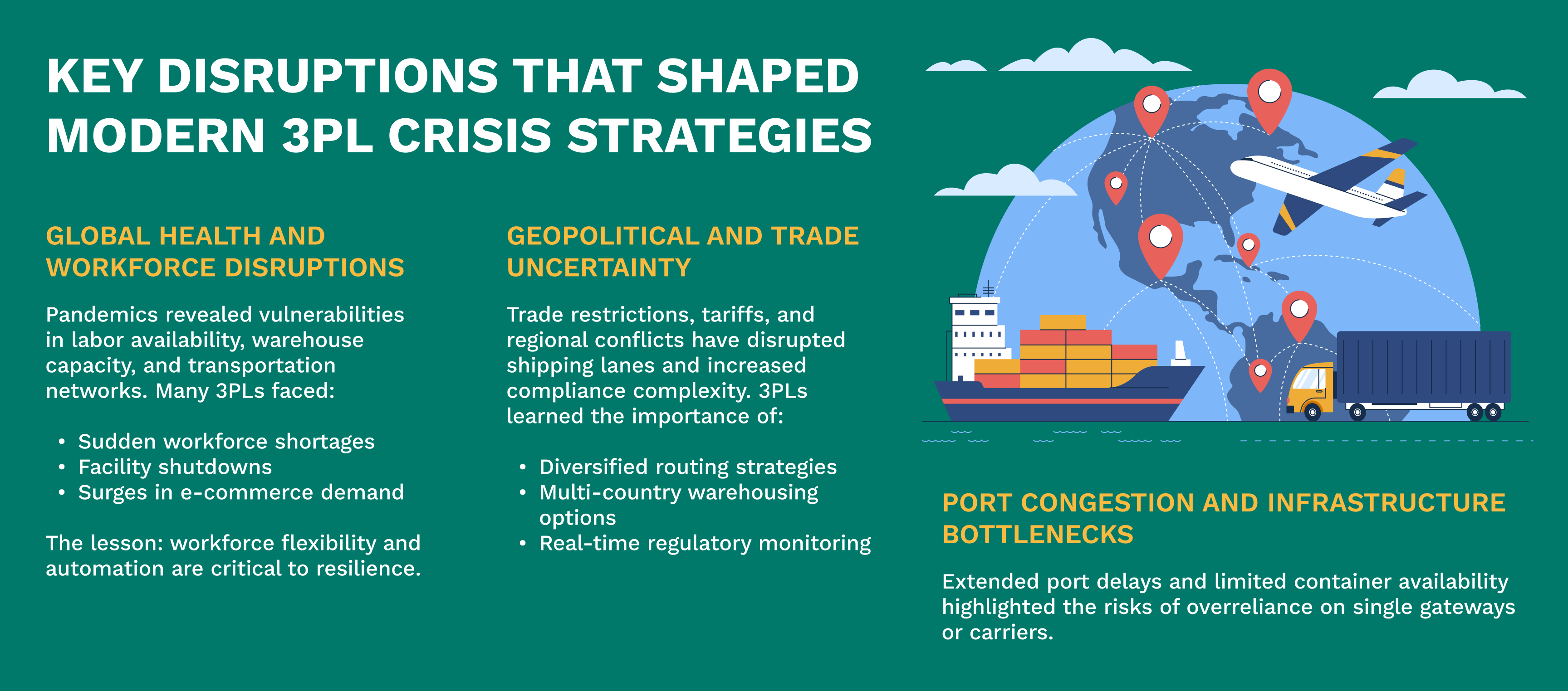
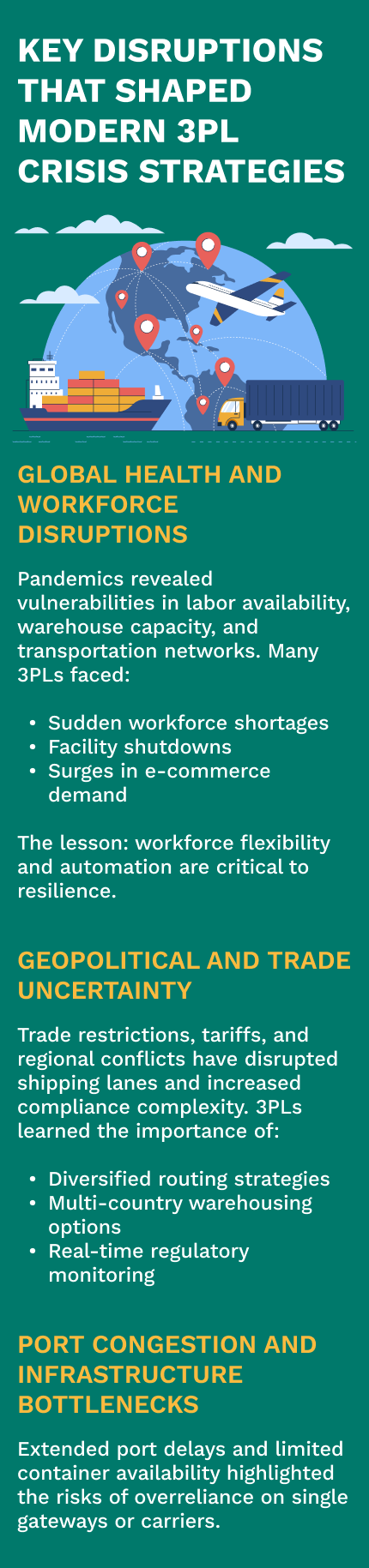
Core Lessons Learned from Recent Disruptions
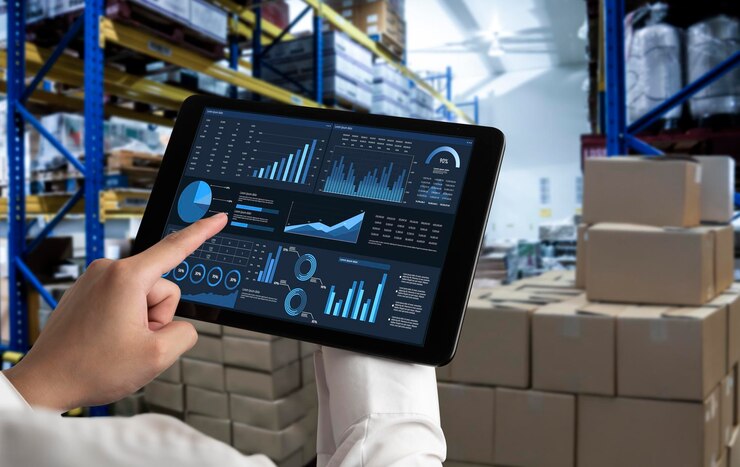
Visibility Is the Foundation of Crisis Response
3PLs with real-time data and end-to-end visibility responded faster and communicated more effectively with clients. Advanced tracking systems and integrated platforms proved essential for:
- Identifying bottlenecks early
- Rerouting shipments
- Managing customer expectations

Scenario Planning Beats Reactive Decision-Making
Crisis-ready 3PLs regularly test “what-if” scenarios, such as:
- Sudden port closures
- Carrier failures
- Demand spikes
This proactive approach reduces panic-driven decisions and shortens recovery times.
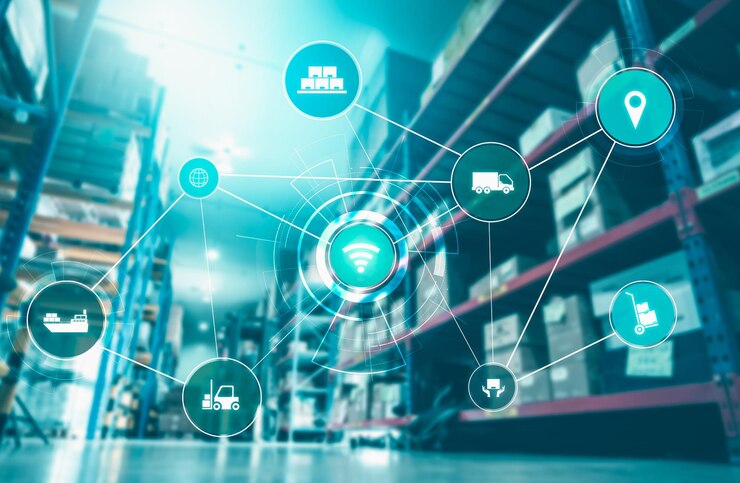
Strong Partner Networks Reduce Risk
Disruptions revealed the value of having:
- Multiple carrier relationships
- Backup suppliers and warehouses
- Flexible last-mile partners
Redundancy, once seen as inefficient, is now recognized as a competitive advantage.
Technology’s Role in 3PL Crisis Planning
Digital tools have become central to effective crisis management:
- Predictive analytics help forecast risks before they escalate
- Automation and robotics reduce dependence on labor during disruptions
- Cloud-based systems enable remote operations and data access
- AI-driven demand forecasting improves capacity planning during volatile periods
3PLs investing in technology are seeing faster recovery times and improved service reliability.
Key Benefits of Strong Crisis Planning for 3PL Providers
- Improved operational resilience during unexpected events
- Higher customer retention through consistent service levels
- Faster recovery and reduced downtime
- Stronger brand reputation as a reliable logistics partner
- Better financial performance through minimized losses
In today’s environment, resilience is as valuable as speed and cost efficiency.
Building a Crisis-Ready 3PL Strategy
To strengthen crisis preparedness, 3PL providers should:
- Conduct regular risk assessments across operations
- Develop clear crisis response playbooks
- Invest in real-time visibility and analytics tools
- Train teams on emergency protocols
- Collaborate closely with customers and partners
These steps ensure that when disruption occurs, response is swift, coordinated, and effective.
Conclusion
Recent global disruptions have permanently reshaped how 3PL providers approach risk and resilience. Crisis planning is no longer about reacting to emergencies—it is about building systems, partnerships, and strategies that can withstand uncertainty.
For 3PL companies, the lessons are clear: visibility, flexibility, technology, and proactive planning are essential to navigating future disruptions. Those who apply these lessons will not only survive the next crisis but emerge stronger, more trusted, and more competitive in an unpredictable global logistics landscape.