In 2026, Environmental, Social, and Governance (ESG) reporting isn’t just a corporate buzzword — it’s a critical business requirement shaping how brands choose and evaluate their third‑party logistics (3PL) partners. With pressures from customers, investors, regulators, and conscious consumers rising, 3PLs that deliver transparent and data‑driven ESG disclosures are more competitive than ever.
Why ESG Reporting Matters for 3PL Clients
Today’s supply chain clients expect more than on‑time deliveries and seamless fulfillment. They increasingly demand visibility into a logistics partner’s environmental performance, social impact, and governance practices. This shift is driven by:
- Regulatory action such as EU Corporate Sustainability Reporting Directive (CSRD) and emerging climate disclosure mandates in key markets, making ESG reporting a compliance necessity.
- Brand accountability, where buyers want proof that their partners uphold ethical labor practices and reduce carbon footprints.
- Investor scrutiny, pushing companies to include Scope 3 emissions (like outsourced logistics) in sustainability disclosures.
In this environment, logistics providers like 3Gistix that integrate ESG reporting into their service offerings stand out as strategic partners — not just operational vendors.
Key ESG Reporting Expectations from 3PL Clients in 2026

Carbon and Emissions Transparency
Clients want accurate data on transport and warehousing emissions tied to fulfillment activity. This includes:
- CO₂ emissions per shipment and per route
- Real‑time sustainability metrics dashboards
- Integration with enterprise tools for carbon accounting
Brands are especially focused on Scope 3 emissions, which constitute a major portion of total corporate carbon footprints. Snapl
Why it matters:
ESG reporting that includes emissions tracking helps brands meet both regulatory compliance and internal sustainability goals — a competitive differentiator for 3PLs.
Green Warehousing and Eco Operations
Sustainability isn’t only about reporting — it’s about performance improvement. Key expectations include:
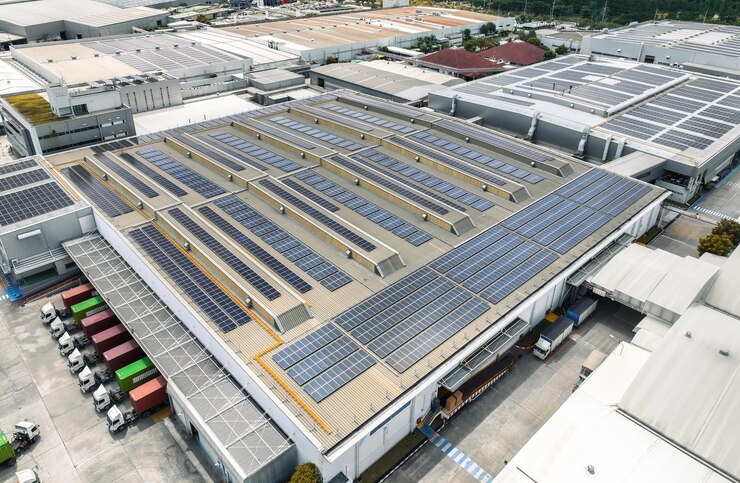
- Warehouses with energy‑efficient systems, solar power, and LED lighting
- Electric or low‑emission fleets
- Smart systems to minimize idle time and energy waste
Analytics & Statistics:
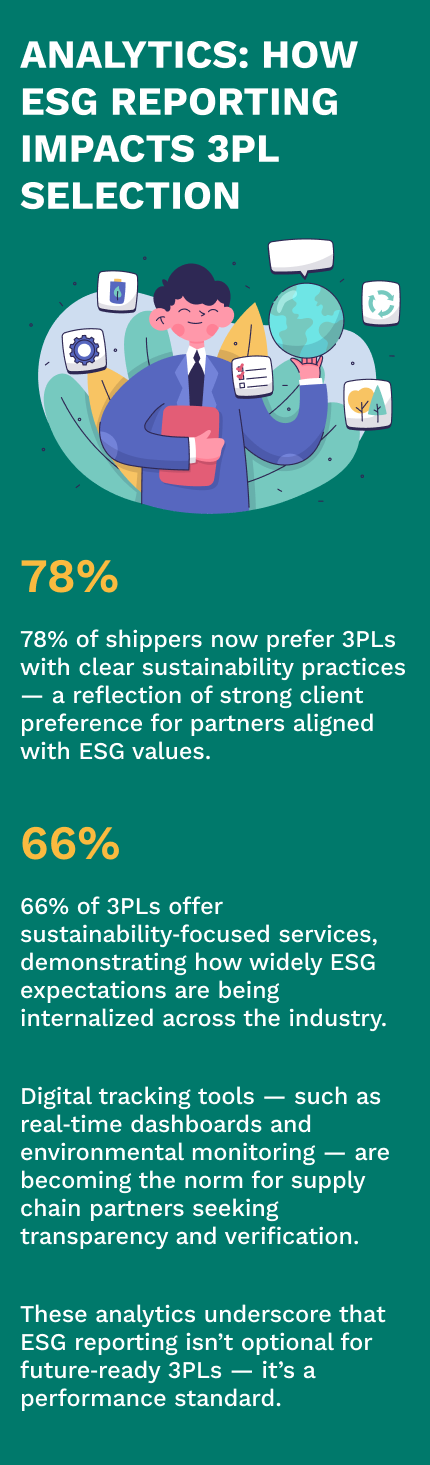
According to recent industry data, 68% of 3PL companies implemented sustainability initiatives, and 60% measured sustainability KPIs as part of operations.

Social Responsibility and Workforce Metrics
ESG isn’t solely environmental. Clients also expect:
- Disclosure of labor practices and worker safety protocols
- Diversity, equity, and inclusion commitments
- Transparent human capital reporting
These social performance indicators increasingly factor into procurement decisions and corporate reports.

Governance and Data Integrity
Clients demand reliable and auditable data. This includes structured ESG reports aligned with global frameworks (e.g., GRI, SASB) and secure systems that ensure accuracy, traceability, and consistency across reporting cycles.
Modern ESG reporting platforms also help automate compliance and reduce manual errors, critical for global brands operating in diverse jurisdictions.

Key Benefits of Strong ESG Reporting for 3PL Clients
Competitive Advantage
ESG‑focused 3PLs win more contracts as brands prioritize partners who help them hit sustainability targets.
Better Risk Management
Accurate reporting uncovers supply chain risks early — from emission sources to labor or governance issues.
Improved Stakeholder Trust
Transparent ESG data builds credibility with investors, regulators, and end consumers.
Operational Insights
ESG frameworks often reveal opportunities for efficiency improvements, from route optimization to energy savings.
Why 3Gistix Is a Strategic ESG‑Reporting Partner
At the forefront of logistics innovation, 3Gistix combines operational excellence with advanced ESG reporting capabilities that help clients:
- Gather actionable data across environmental and social metrics
- Integrate reporting tools with corporate dashboards
- Achieve compliance with global and regional reporting standards
By offering structured ESG reporting as part of its service suite, 3Gistix enables brands to strategically leverage logistics performance as part of broader sustainability commitments — driving both impact and growth.
Conclusion
In 2026, ESG reporting has shifted from a “nice‑to‑have” to a strategic imperative for third‑party logistics partnerships. Clients expect transparent carbon data, socially responsible practices, and governance transparency from their 3PLs. Those who rise to the challenge — powered by intelligent partners like 3Gistix — unlock competitive advantage, deeper client trust, and long‑term resilience.
Strong ESG reporting isn’t just about compliance — it’s about driving value, improving efficiency, and aligning logistics with the broader goals of sustainability and purposeful growth.